World Hydrogen North America: Hydrogen-fueled trucks need more operational data to bring down costs
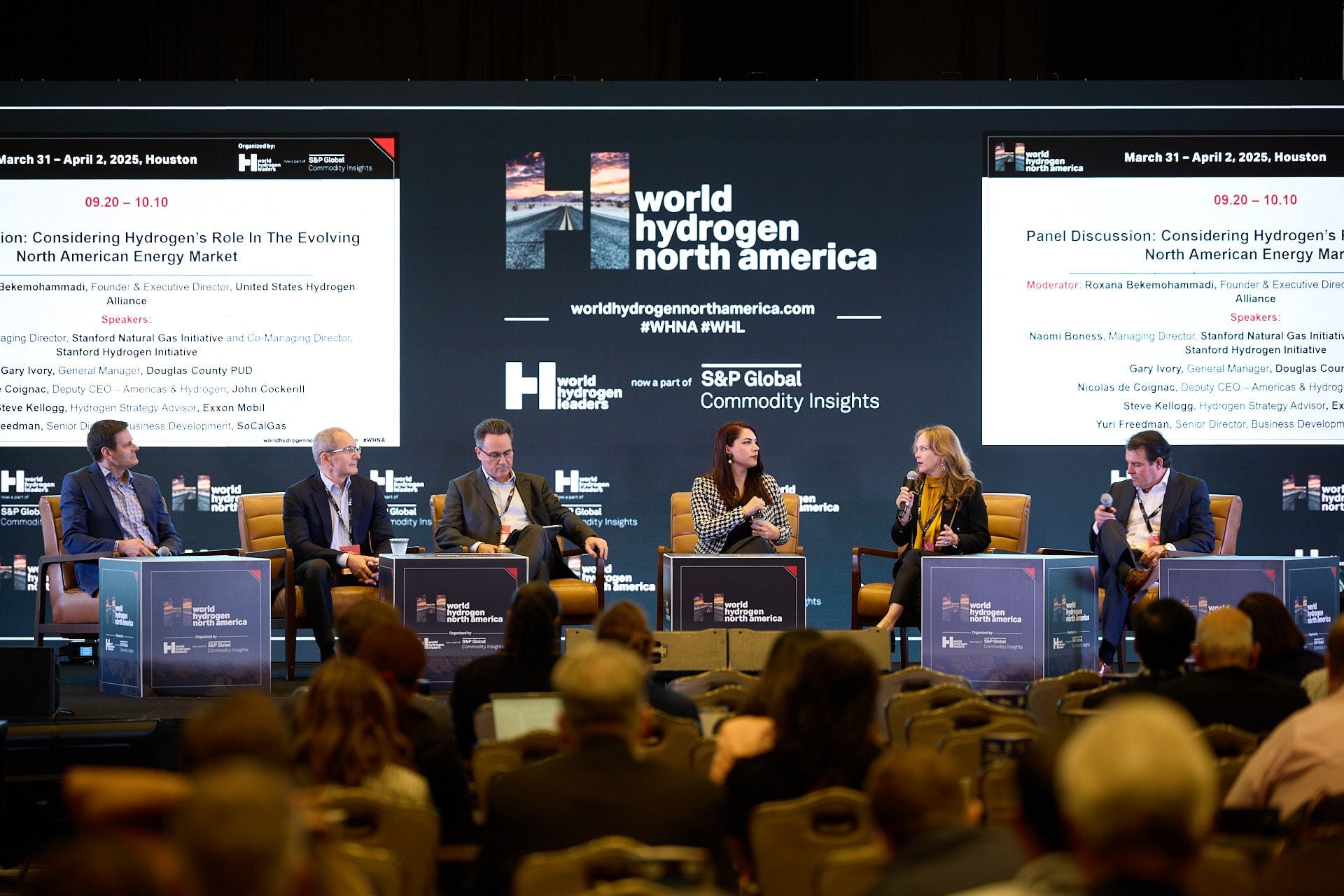
A "consensus" is forming that hydrogen is one of the best bets to decarbonize heavy-duty transport, but getting there will take years or decades of market development and risk management, panelists said at the World Hydrogen North America conference.
Panelists at the conference, which ran in Houston from March 31 - April 2, saw hydrogen as particularly promising for heavy-duty, long-distance transportation. Panelists especially highlighted hydrogen’s potential in truck fuel while acknowledging its challenges, including limited refueling stations, high capital cost for infrastructure and technological complexities.
"We are in an interesting starting point today with hydrogen, very much like what we were in in 2019 with electric vehicles," Paul Rosa, senior vice-president of procurement and fleet planning at Penske Truck Leasing, said.
Steve Kellogg, hydrogen strategy advisor at ExxonMobil, was explicit about hydrogen's potential in transportation, saying it is "likely to be the best solution" for heavy-duty long-haul transportation in the US. He said hydrogen has evolved away from being considered a "silver bullet" and said there is an "emerging consensus on where it really fits."
John Hall, CEO of the Houston Advanced Research Center, said Texas is looking at hydrogen as a potential solution for decarbonizing heavy-duty trucks.
"There is a consensus emerging in Texas [on] what the solutions are," Hall said. "We have major companies making investments and all of these sources of energy recognizing that they need to be broadly deployed, particularly over the next 15 years… I'm optimistic that we can still get there."
The lack of widespread commercial deployment is caused by a variety of factors commonly discussed, like the high costs of vehicles and fuel. Additionally, the lack of commercial presence for these vehicles itself brings upward pressure on pricing, Julia Schulz, managing consultant at the Center for Transportation and the Environment, said.
Schulz said there is a lack of long-term performance data for these vehicles, which adds to already high upfront vehicle costs.
"These vehicles haven't been through a full life cycle yet," Schulz said. "Insurance brokers are struggling to provide premiums that are affordable because there's so much risk."
High capital expenses required for hydrogen refueling stations means high costs for the dispensed hydrogen, and the more vehicles deployed "means the burden is shared amongst many players, and the more the cost will go down," she added.
"If you go to the pump station right now, you might see $36/kg," Schulz said.
Platts, part of S&P Global Commodity Insights, assessed the March monthly average hydrogen pump price in California at $34.34/kg on April 1 for light duty applications. Pump prices in the state are elevated partly due to ongoing station outages caused by supply disruptions.
Schulz said reaching scale is "the main goal" of the Alliance for Renewable Clean Hydrogen Energy Systems and other the other six $1 billion Department of Energy hydrogen hubs. These hubs are currently in limbo after President Trump paused the disbursement of funds from the Inflation Reduction Act and bipartisan infrastructure law on Jan. 20. Some of the hubs’ funding may be on the chopping block, including ARCHES, according to a leaked document.
One of the strategies to tackle these compounding issues include long-term subsidies that could cut higher upfront costs and increase confidence, Schulz said.
"We’ve lost Hyzon, we’ve lost Nikola, we’ve had truck delays… We’re in this point where we are at the bottom of this valley," she said. "Subsidies make these things happen right now."
Rosa said subsidies could also introduce uncertainty for companies looking to decarbonize their fleets.
"If companies start this transformation of their fleet from diesel to some of the alternatives with the subsidies, and then the subsidy goes away… what are they going to do?" Rosa said.
Garbage truck maker Hyzon announced its Nasdaq delisting after California's Hybrid and Zero-Emission Truck and Bus Voucher Incentive Project's general fund ran out of cash in November 2024. The company was in the process of negotiating contracts for its trucks and had "multiple fleets at signatures" when it learned the HVIP general fund "went to zero," former CEO Parker Meeks said at a conference on Dec. 8, 2024.
Rosa said diesel vehicles today are "as clean as they have ever been," and the decarbonization strategy for heavy-duty trucking should be retiring older vehicles that are polluting the most and replacing them with a newer, "cleaner diesel" vehicle.
"What we have to focus on is not necessarily getting more battery electric or more hydrogen right away," Rosa said. "This is not a sprint, it's not even a marathon... this is a journey that's going to take us decades to get there," he added. "We’ll get there… but it's got to happen because of the right reasons."
By Daniel Weeks