WPC: Carbon management now key factor in petchem investment
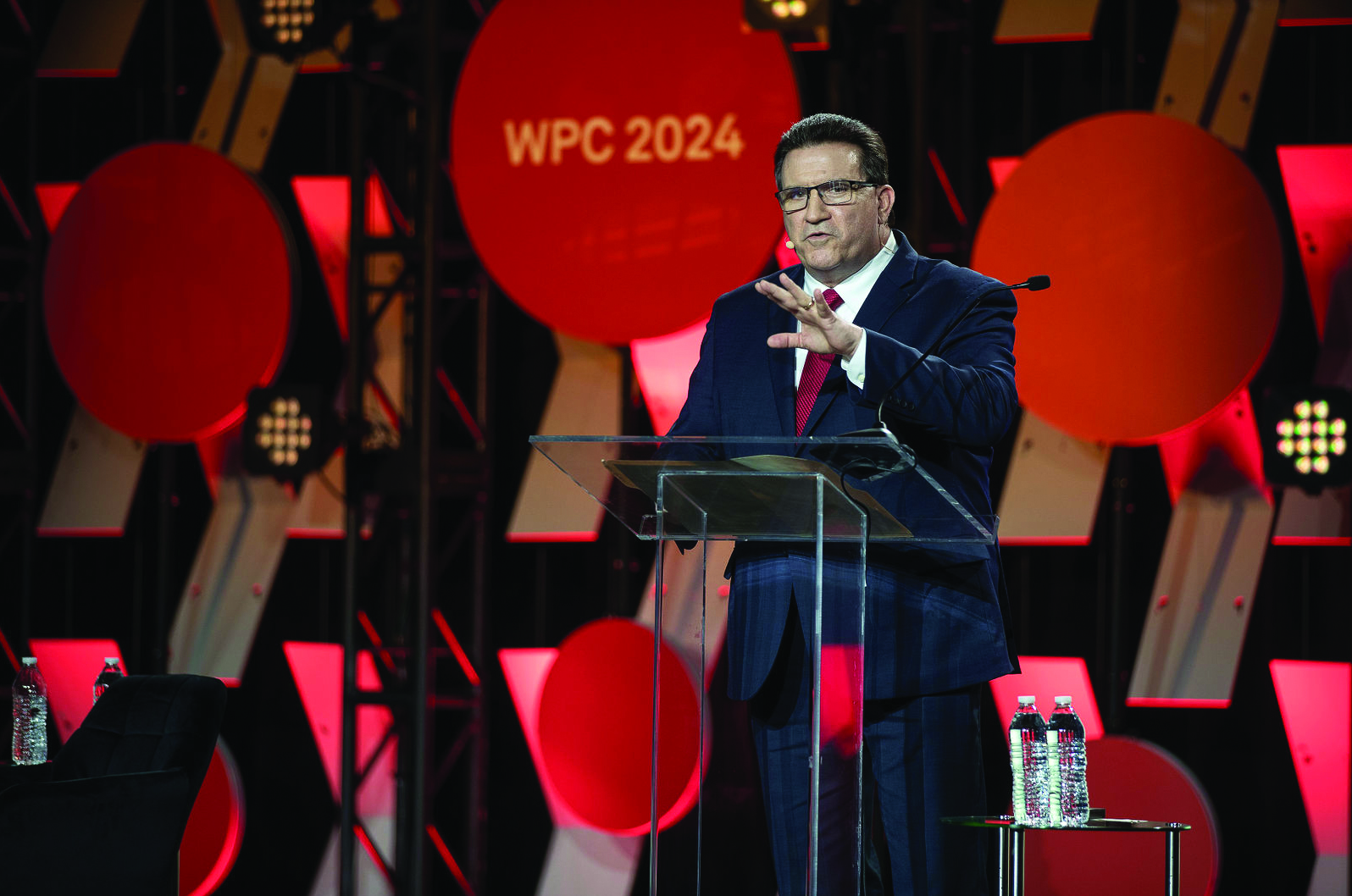
For petrochemical producers making capital investment decisions today, the management of CO2 emissions may have become as important as feedstock advantage, production technology, market access and integration, says Mark Eramo, global head/fuels, chemicals & resource solutions at S&P Global. Eramo discussed the implications of the energy transition for petrochemical investment at the World Petrochemical Conference by S&P Global in Houston.
"Where can I be competitive? I would say that for the last 10 years, there’s been a model of build low-cost and ship to high-demand regions," said Eramo. "Today we’re saying that now there’s a fifth consideration, and that is, how do I provide effective carbon management? How will that change the footprint over the next 10 years when it comes to the location strategy of petrochemical assets? Maybe the model stays the same. Or does the fact that you need an effective carbon management strategy in order to get the financing you need or approval from the board [mean] that now your location strategy is going to have to be slightly different than it was in the past?"
Eramo said the petrochemical industry is committed to lowering carbon emissions. However, doing so is "a global balancing act complicated by geopolitics," he told attendees. "It’s about curtailing demand for high-intensity carbon energy while decarbonizing supply and then trying to build this green-energy economy of the future," he stated. "And probably the most important thing […] is that energy security and energy affordability are at the front of the line in creating this multidimensional energy transition dynamic."
Most of the world’s population remains eager to improve their living standards, and demand for energy and consumer goods will necessarily increase. "You have to continue to supply the growing needs of a growing population with the assets you’ve got on the ground," Eramo noted. "Those are hydrocarbon-based assets for the most part. So this balancing of capital to make my current assets profitable and meaningful while I try to transition to this cleaner greener energy-based future is the balancing act that these executives are facing."
Decisions around capital investment must balance the need for an energy transition not only with the broader needs of society but also with the financial realities that place limits on the path and speed of progress.
"This set of assets has to be very profitable, and it has to fund the ability to get to this green future — the ability to bring in renewable energy, to look at on-site electrification or go with carbon capture, to go with hydrogen, [or] deeper integration into chemicals. That hydrocarbon-based business has to be able to fund the cash flow that enables me to make the investments that get me to a lower carbon future."
"The pathway to net-zero requires us to rethink business models and evaluate low-carbon inputs along with end-of-life solutions for consumer goods," said Eramo. Incentives will be more effective than penalties, he said, because they attract capital investment. "I also believe a more pragmatic approach makes good sense," he added, such as asking consumers to focus more on managing their own waste.
Eramo stressed the need for multiple solutions. "We have to have hydrocarbons for […] the consumer goods that enable modern living and advance the human condition," he continued. He also argued for carbon pricing. "I’ve heard this multiple times last year and this year: Give me a carbon price, and then let the industry run off that, and we’ll make the decisions that we need to in terms of dealing with carbon," he said.
"When you align informed policy, market mechanisms and technology, that’s when things are most successful," Eramo said. "When you align those three things, you find a resurgence in investment in a region of North America called Alberta that hasn’t seen that kind of investment for decades. When you don’t have that alignment, what you get is some confusion, some hesitation, some misunderstanding, and not investment."
This article was first published in chemweek.com.